MBA projects are distinct in that they can be readily altered to accommodate shifting circumstances, much like snowflakes. Here are some top MBA project ideas that you should know before starting your project :
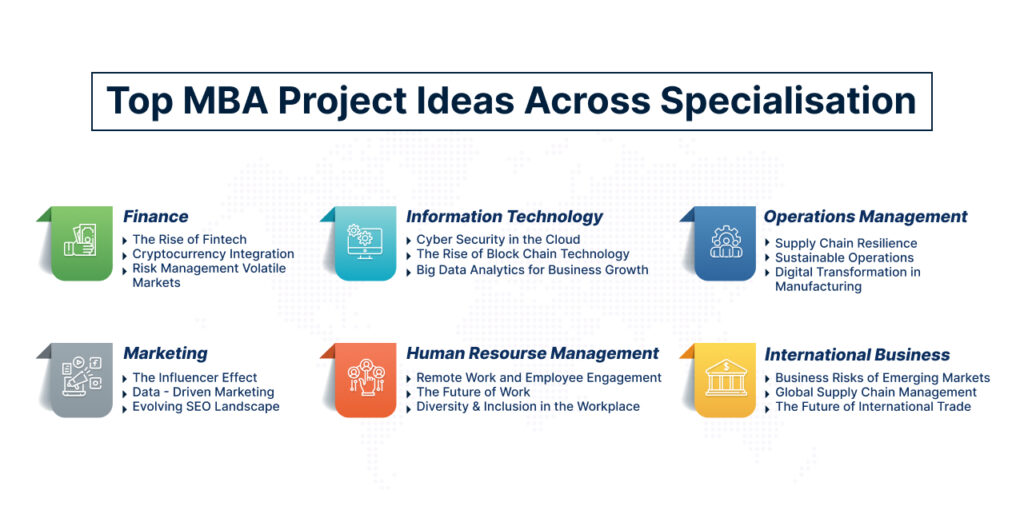
1. Finance:
The Rise of Fintech: Examine how FinTech has influenced and disrupted the traditional financial service sector. See how players disrupt various spaces, including payments, wealth management, and lending. Think about the lack of qualitative research and the subsequent implications for expanded access to financial services. This is a timely MBA project idea that explores a rapidly evolving field.
Cryptocurrency Integration: Evaluate the two papers and the possibility of using cryptocurrency in investment decisions. Sensitise the risks and opportunities inherent in the asset class and recommend solutions for adequately integrating it into the portfolio.
Risk Management in Volatile Markets: Utilize the risk management principles to manage this new sphere for interacting with market conditions. It could involve assessing the appropriateness of stress testing approaches, portfolio diversification methods and hedge programmes.
Refrain from settling for generic MBA project ideas. Find a project that excites you and showcases your unique skills.
2. Marketing:
The Influencer Effect: Explore the effects of social media influence on the purchase process. This refers to engaging different categories of influencers, their reach to different audiences, and various ethical implications of the partnerships.
Data-Driven Marketing: The topic is the use of Artificial Intelligence in the localisation of marketing campaigns. Insight into how the technology of AI can be used in delivering messages, product recommendations and preferences of each customer.
Evolving SEO Landscape: Review the dynamic character of SEO activities since it is an essential and ever-evolving field.
Because Google’s algorithms are a major factor in deciding how visible websites are, it is important to discuss the implications of these changes and the most effective strategies to deal with them.
3. Operations Management:
Supply Chain Resilience: Develop strategies for building resilience into supply chains in an era of global disruption. This could include diversification of suppliers, near-shoring initiatives, and investment in logistics technology.
Digital Transformation in Manufacturing: Describe the various strategic manufacturing issues that may be affected by digital technologies such as robotics and automation in manufacturing. Explain to what extent new approaches to management, organisation, and work will directly impact the overall efficiency, workers’ productivity, and the quality of products.
Sustainable Operations: Introducing the concept of a Sustainable Business Operations System to guide practice within an organisation. This might refer to reduced waste management practices, using energy conservation methods, and procuring materials in the best way possible.
4. Human Resource Management:
Remote Work & Employee Engagement: Examine how remote work affects personnel engagement and performance. Establish appropriate approaches for the organisation to adopt when creating a conducive environment for employees working remotely, communicating with them, and encouraging teamwork.
Diversity & Inclusion in the Workplace: Analyze best practices for creating a diverse and inclusive workplace environment. Explore strategies for attracting and retaining talent from diverse backgrounds and promoting an atmosphere of respect and inclusion.
The Future of Work: Future developments in the labour market, including trends such as automation processes and the gig economy, should also be investigated.
As part of the analysis, job roles that may be affected by the implementation of emerging technology applications should be discussed critically, as should the relevant skill sets required for workforce development strategies.
5. Information Technology:
Cybersecurity in the Cloud: Develop a framework for secure cloud computing practices. This could include data encryption strategies, access control mechanisms, and disaster recovery plans.
The Rise of Blockchain Technology: Analyze the potential applications of blockchain technology in various industries. Explore its use cases in areas like supply chain management, secure financial transactions, and data provenance.
Big Data Analytics for Business Growth: The important next step is to establish the guidelines for using big data analytics for this purpose. This could include methods of data collection, methods of data presentation or visualisation, as well as usage of data in decision processes.
6. International Business:
Business Risks of Emerging Markets: Analyze the opportunities and challenges associated with doing business in emerging markets. Consider factors like political instability, currency fluctuations, and infrastructure development.
Global Supply Chain Management: Formulate practical approaches to address logistical global supply chain requirements. This could include economic interconnecting policies such as trade, commerce, movement of people, products, services, and social factors.
The Future of International Trade: Examine the potential impact of technological advancements and geopolitical shifts on international trade. Examine how these factors shape the global market .




 Hike Education





.png)

.png)